Brasserie in Paris: understanding and choosing a real Parisian brasserie
In Paris, the word brasserie means much more than a simple restaurant: it is a place of continuous service, open from morning to evening, where you eat classic food without ceremony. This article traces the origin of the term, explains what sets a real Parisian brasserie apart from a bistro or a cafe, and gives concrete cues for choosing the right address, from the tourist centre to the neighbourhood brasseries of the 14th arrondissement.
Brasserie in Paris: what are we really talking about?
The word brasserie has a concrete origin: it comes from the verb brasser, meaning to brew beer. In the nineteenth century, Paris saw the opening of establishments often run by families from the East, where beer was brewed or sold and where food was served all day long. The term settled on this usage, and it ended up designating a very specific type of table rather than a place of production.
Today, speaking of a brasserie in Paris no longer refers to brewing beer, but to a format of dining: a classic menu, a service that never stops between meals, a room open from morning to evening. It is this continuity, this availability, that separates the brasserie from the gourmet restaurant reserved for two seatings. You step in for a coffee just as much as for a full meal, without ceremony.
Brasserie, bistro, cafe: how to tell them apart in Paris
People often confuse brasserie, bistro and cafe, because the boundaries are blurred and many addresses play across several registers. The cafe, historically, is first of all for drinking: you have an espresso at the counter, sometimes a simple dish. The bistro is smaller, more intimate, with a short menu and often a daily blackboard that changes with the market.
The brasserie stands out by its scale and its breadth. The room is larger, the menu wider, and above all the service runs all day. It is the place that can welcome a rushed lunch, an improvised afternoon snack and a family dinner on the same day, without ever closing its doors in between. This versatility is its hallmark, and it is also what makes it a neighbourhood landmark.
What makes a good Parisian brasserie today
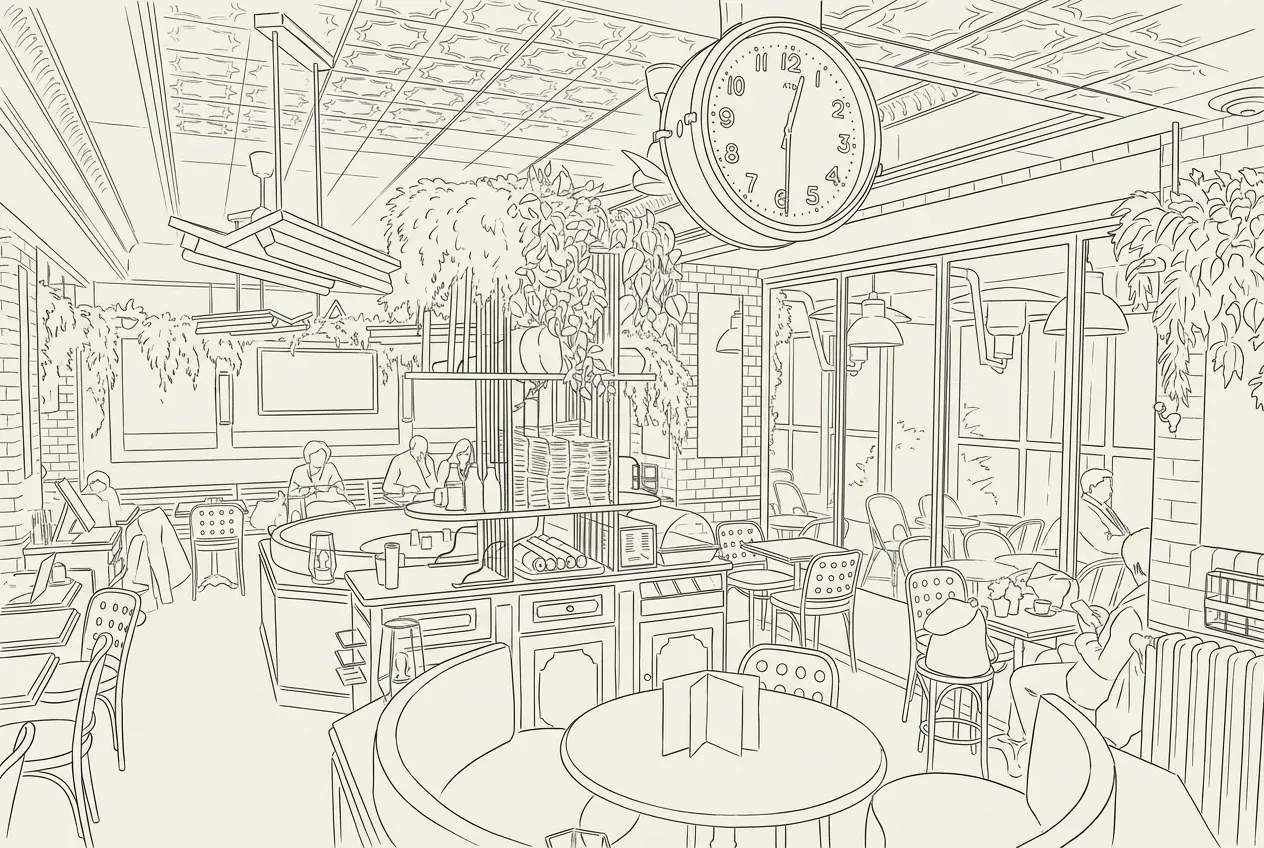
A good Parisian brasserie is not judged by its decor, even if the banquettes, the zinc and the mirrors are part of the imagery. What matters first is the plate. Homemade cooking, fresh produce, a menu that follows the seasons: these are the real signals. A brasserie that prepares its dishes on site, that chooses its suppliers carefully and that embraces a tight menu rather than an endless one inspires more confidence.
The second criterion is consistency. A brasserie lives off its regulars, those who come back because they know what they will find. This requires steadiness in quality, a welcome that recognises faces, a controlled pace of service. The great prestige brasseries have their place, but most Parisians are above all looking for a reliable address where you eat well without breaking the bank or booking weeks in advance.
Finally, a good brasserie knows how to host different situations: the solo guest at the counter, the couple on the terrace, the table of twelve for a birthday. This ability to absorb varied formats without losing quality sets serious houses apart from purely decorative addresses.
Continuous service, the marker of a real brasserie
Continuous service is probably the most reliable marker of a real brasserie. Many Parisian restaurants close their kitchen around two in the afternoon, only to reopen in the evening. The brasserie, on the other hand, keeps its kitchen open without interruption. You can arrive at eleven in the morning or at four in the afternoon and order a hot dish: that is rare, and it is precious.
This availability changes your relationship with the place. It allows shift workers, travellers between two trains, and families who lunch late to find a table when everything else is closed. In Paris, where everyone schedules have fragmented, continuous service is no longer a detail but a genuine service rendered. It is also a heavy organisational commitment for the establishment, which explains why it has become rare.
Neighbourhood brasserie or grand brasserie: two experiences
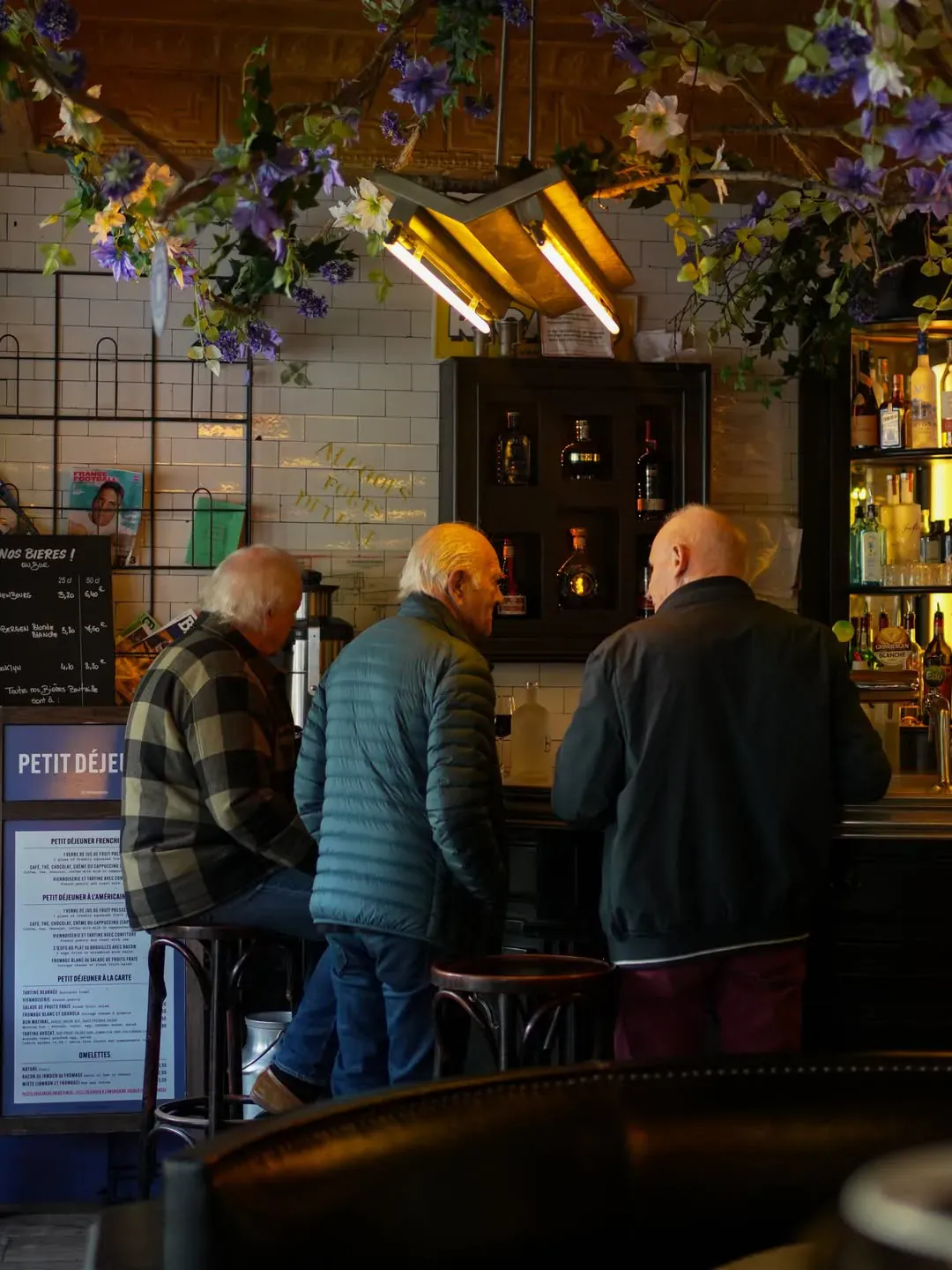
Not all Parisian brasseries are alike. There are the great historic houses, clustered around Montparnasse, the Opera or Saint-Germain, magnificent but often expensive and heavily frequented by tourists. And there are the neighbourhood brasseries, more discreet, rooted in local life, where you mostly cross paths with residents and people who work nearby.
The choice depends on what you are looking for. For an occasion, for the setting, the great brasseries are worth the detour. For everyday life, for a lunch without booking or a dinner without fuss, the neighbourhood brasserie offers a truer experience: you are recognised, you take your time, prices stay reasonable. It is in this second category that the real brasserie life of Paris plays out.
Finding a brasserie in Paris in the 14th, near Alesia
The fourteenth arrondissement illustrates this idea of the neighbourhood brasserie well. Less touristy than the centre, more residential, it lives at its own pace, between offices, families settled for a long time, and students. Around Alesia, along avenue du General Leclerc, you find addresses that resemble their neighbourhood: no showing off, reliable, made to last.
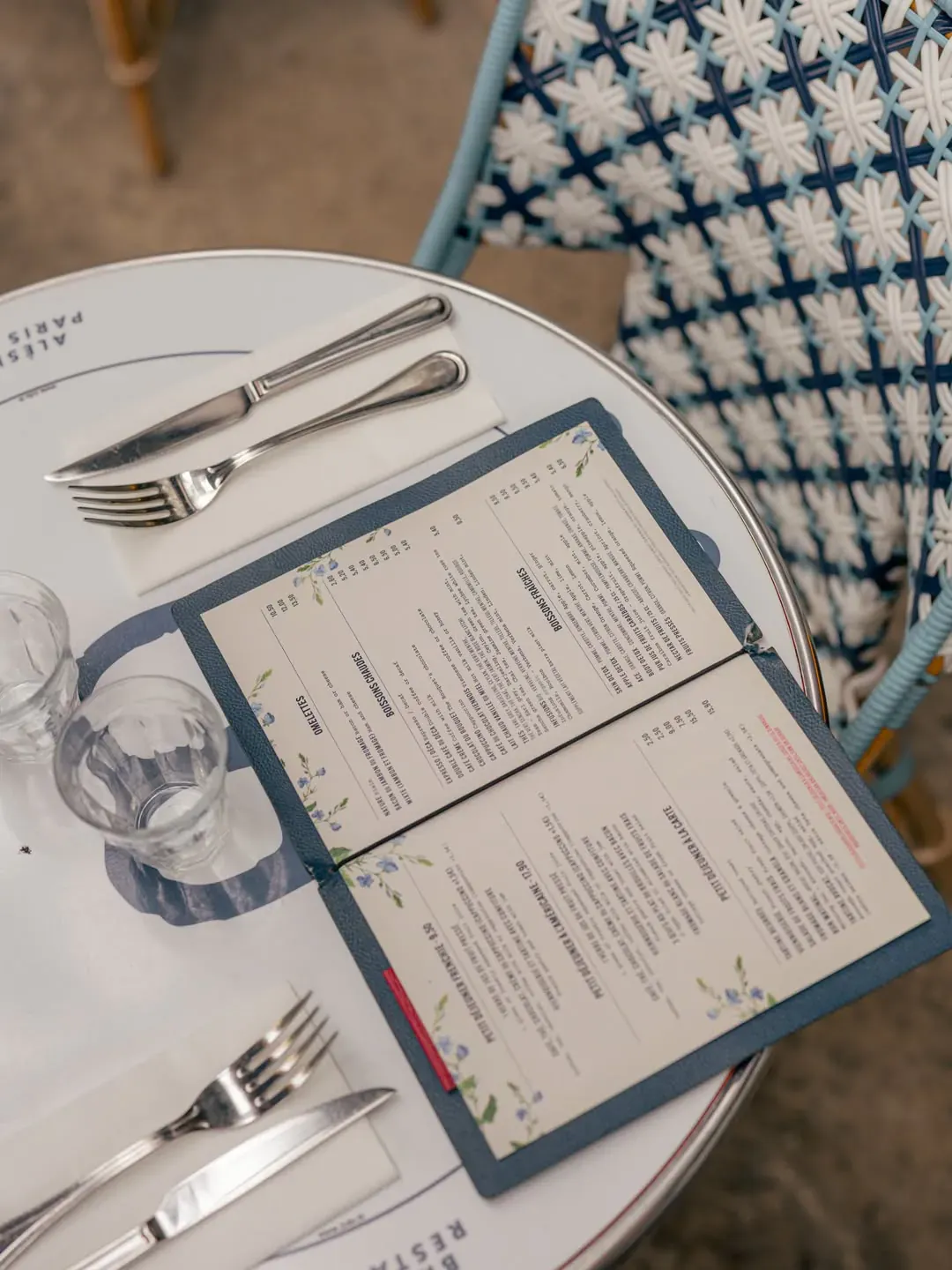
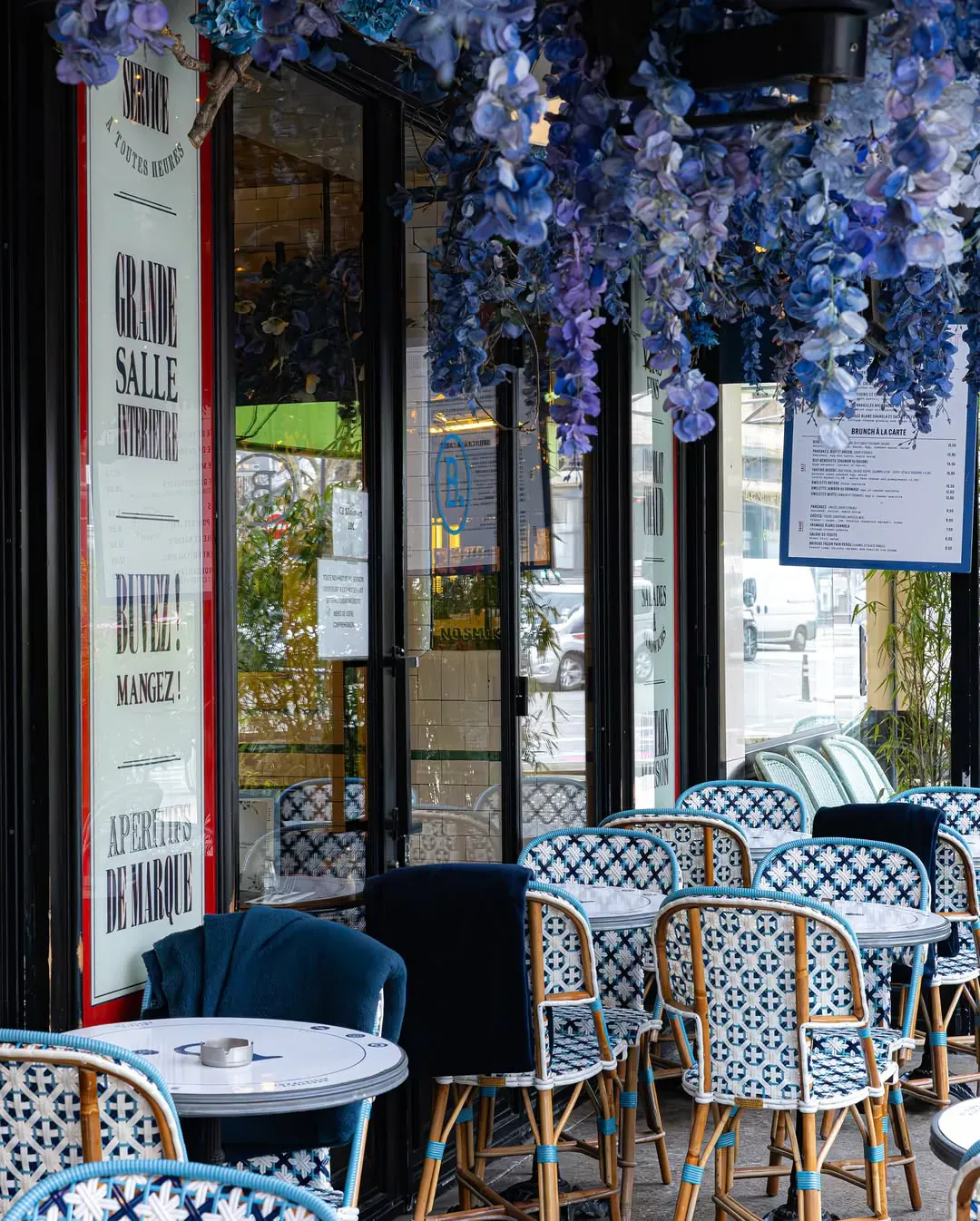
It is in this spirit that Le Bouquet d'Alesia keeps its table, at 75 avenue du General Leclerc. Continuous service seven days a week, homemade cooking, fresh produce and a Sunday brunch: the format is that of a classic Parisian brasserie, put at the service of a neighbourhood that has use for it. The Alesia station, on line 4, and the buses along the avenue make the address easy to reach from across the south of the 14th.
Our tips for choosing your brasserie in Paris
To choose your brasserie in Paris well, a few simple cues are enough. First check the hours: a real brasserie serves continuously, that is a good test. Then look at whether the cooking is announced as homemade and whether the menu changes with the seasons, a sign that fresh produce is worked rather than ready-made preparations.
Finally, consider the use you will make of it. For a quick lunch, favour proximity and continuous service. For a group meal, a birthday or an event, ask about the possibilities for private hire. And for Sunday, check whether a brunch is offered. A good neighbourhood brasserie often meets these three needs at once, which makes it an address worth keeping.
To see an address that applies these principles every day, browse our page dedicated to the brasserie in Paris. There you will find the full format of a Parisian brasserie in the 14th, as practised by Le Bouquet d'Alesia. On the sweet-and-savoury side, also discover the Sunday brunch and the full menu.
Frequently asked questions about brasseries in Paris
What is the difference between a brasserie and a restaurant in Paris?
The main difference lies in continuous service and the menu. A brasserie stays open all day, without a break between lunch and dinner, with a classic menu available at any time. A restaurant most often works in seatings and offers more formal cooking.
Why do Parisian brasseries serve continuously?
It is a legacy of their origin: places open all day where you could drink and eat at any hour. Today, continuous service remains their hallmark and is a real help to everyone whose schedule does not fit the two traditional seatings.
How do you recognise a brasserie that really cooks from scratch?
Several signs help: a menu that changes with the seasons, a reasonable number of dishes rather than an endless list, and an explicit mention of fresh produce. Cooking prepared on site shows in the plate and in the coherence of the menu.
Where can you find a neighbourhood brasserie in Paris?
By moving away from the major tourist routes. Residential arrondissements such as the 14th, around Alesia, Denfert-Rochereau or Pernety, are full of neighbourhood brasseries rooted in local life, quieter and often more affordable than the great houses of the centre.
Do you need to book at a Parisian brasserie?
It is not always required, and that is even one of the advantages of the brasserie: you can often sit down without booking. A reservation is still advised at midday on weekdays, at the weekend and for Sunday brunch, as well as for group meals.
Does a brasserie offer brunch on Sunday?
Many Parisian brasseries now offer a Sunday brunch, a formula mixing savoury and sweet served in late morning and early afternoon. This is the case at Le Bouquet d'Alesia, in the 14th, where brunch is served every Sunday.