
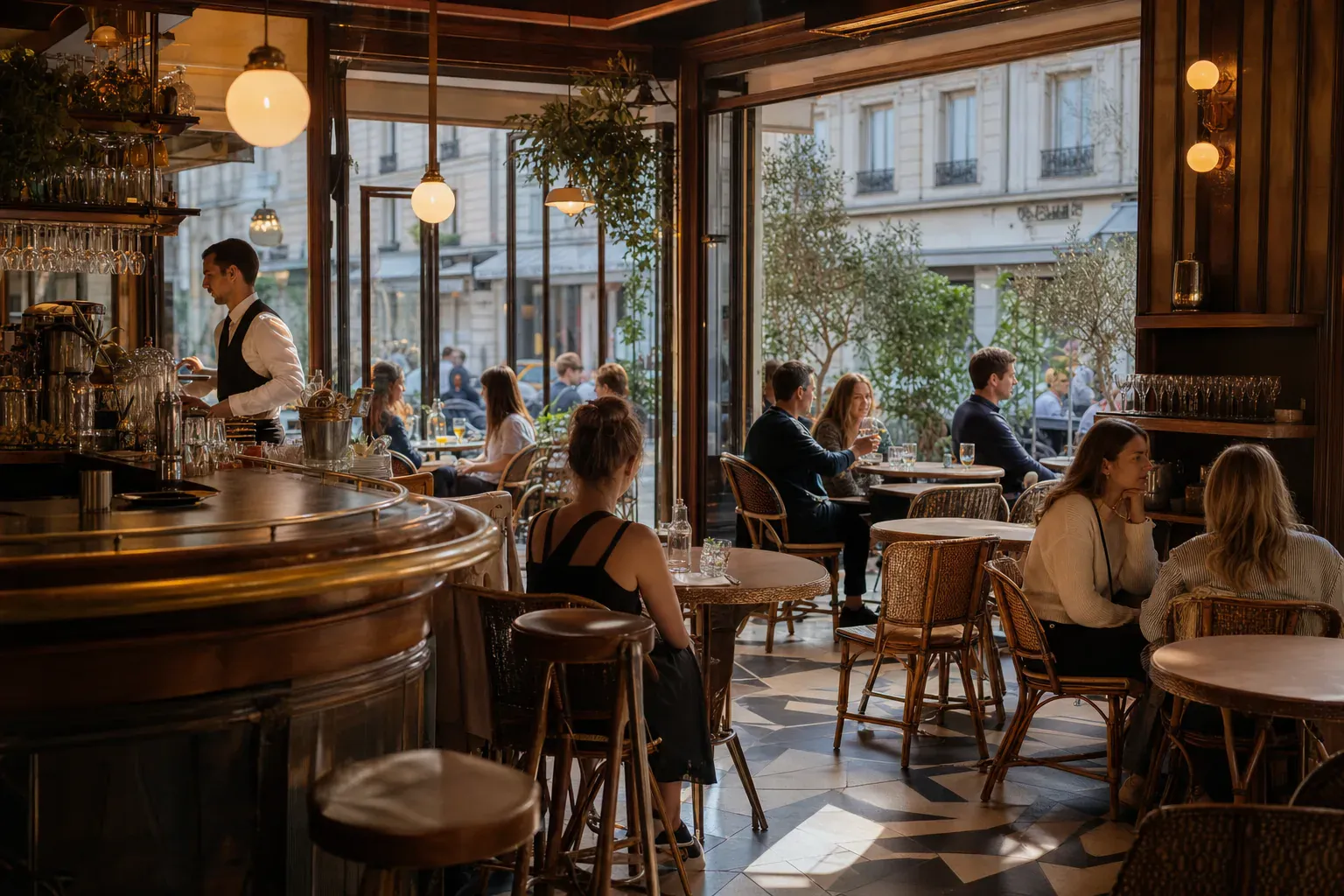
Brasserie, bistro or cafe: the guide to choosing your table in Paris
Brasserie, bistro or cafe: three formats often confused, three different promises. Here is the clear guide to picking the right address for the occasion.
- The brasserie comes from Alsatian brewers: large rooms, all-day service, a broad menu, food at any hour.
- The bistro is a small family neighbourhood format with daily chalkboard cooking and fixed services.
- The cafe centres on drinks, the counter and the terrace, with breakfast and light bites.
- Le Bouquet d'Alesia, in the 14th, embodies the traditional Parisian brasserie: home cooking, all-day service 7/7.
We use the words as synonyms, yet everything sets them apart. Calling a place a brasserie, a bistro or a cafe announces a menu, a service rhythm, a mood and often a budget.
This article untangles the three Parisian formats, gives the cultural keys that are often missing, and helps you read a Paris storefront to choose your table wisely.
Brasserie, bistro, cafe: three words, three promises
In Paris the three signs often sit on the same pavement, and a brasserie looks much like a bistro from the street. Each answers a precise use, inherited from its own history. The brasserie promises abundance and availability at any hour.
The bistro promises intimacy and market cooking; the cafe promises the pause: a coffee at the counter, a drink on the terrace. Understanding the three promises already tells you where to go.
Origins: where the brasserie, bistro and cafe come from
Each was born from a concrete need, and that origin still shapes its menu, hours and mood.
The brasserie: Alsatian roots
The word means 'place where beer is brewed'. After 1870, Alsatians opened Paris venues serving beer and generous dishes, adopting all-day service in large mirrored rooms.
The bistro: the small family format
A modest, often family-run place with market-driven daily cooking, fixed services and few covers. Its charm lies in proximity and a changing chalkboard.
The cafe: counter and terrace
First a place of drinks and sociability, built around the counter and terrace, with light food: pastries, tartines, croque-monsieur and snacks at any hour.
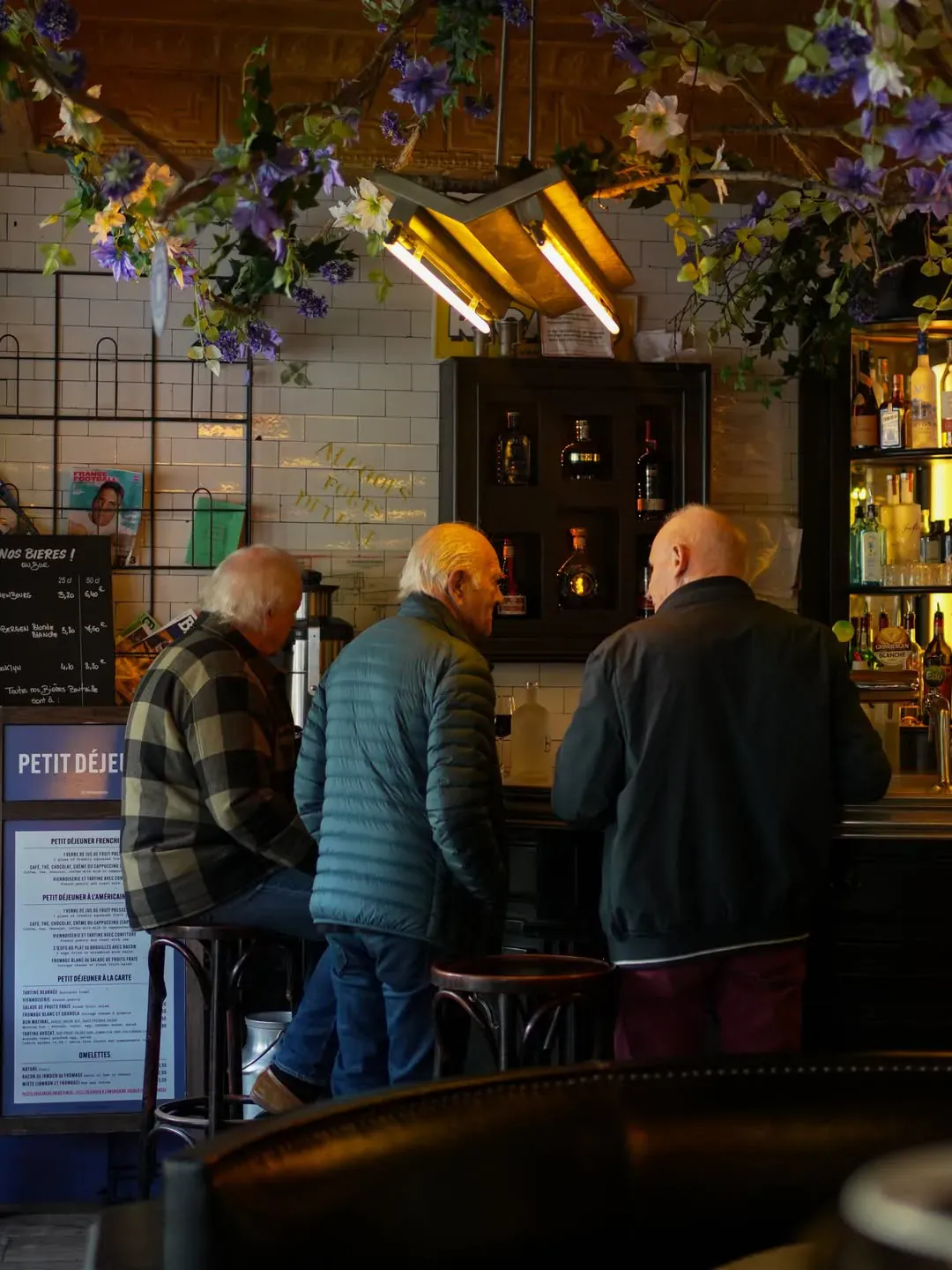
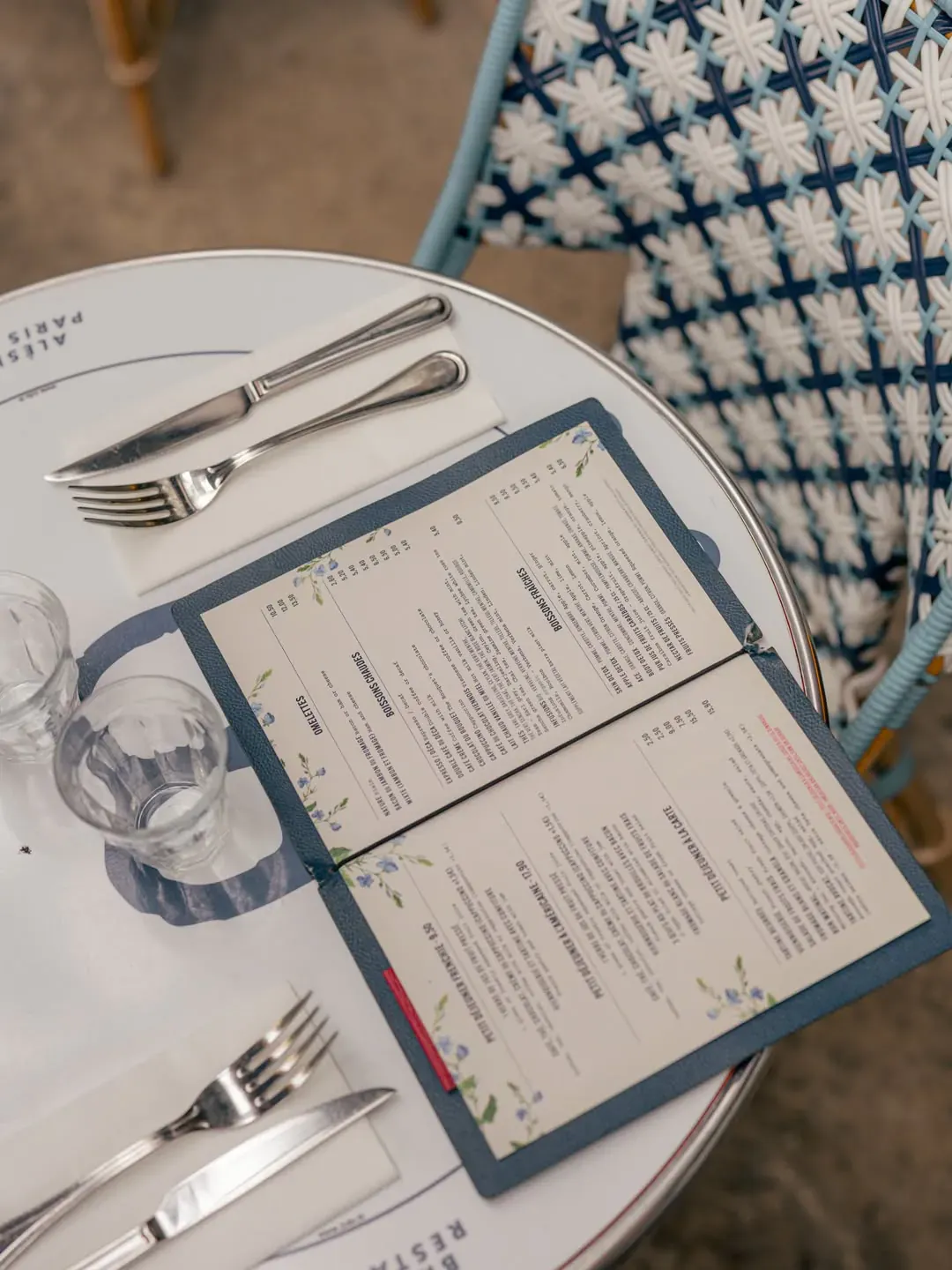
Brasserie vs bistro: 5 concrete differences
Five criteria that truly separate them once you are through the door.
The menu: broad vs short chalkboard
The brasserie offers a long, stable menu all year; the bistro bets on a short board that changes with the market.
Hours: all-day vs fixed services
The brasserie serves continuously; the bistro usually works fixed midday and evening slots with a break between.
Size and mood
The brasserie fills large lively rooms; the bistro cultivates an intimate neighbourhood atmosphere.
Budget
The bistro is generally more accessible; the brasserie spans from a simple plate to a seafood platter.
Time of day
You visit a bistro for a proper meal; you enter a brasserie at any hour, from late lunch to after-show supper.
Comparison table: brasserie, bistro and cafe
The three formats side by side on the criteria that matter.
| Criterion | Brasserie | Bistro | Cafe |
|---|---|---|---|
| Menu | Long and stable | Short daily board | Snacks and tartines |
| Hours | All-day service | Fixed services | All day, drinks |
| Mood | Large, lively room | Intimate, local | Counter and terrace |
| Budget | Reasonable to mid | Accessible | Light |
| Occasion | Any hour, groups | Lunch, refined dinner | Pause, breakfast |
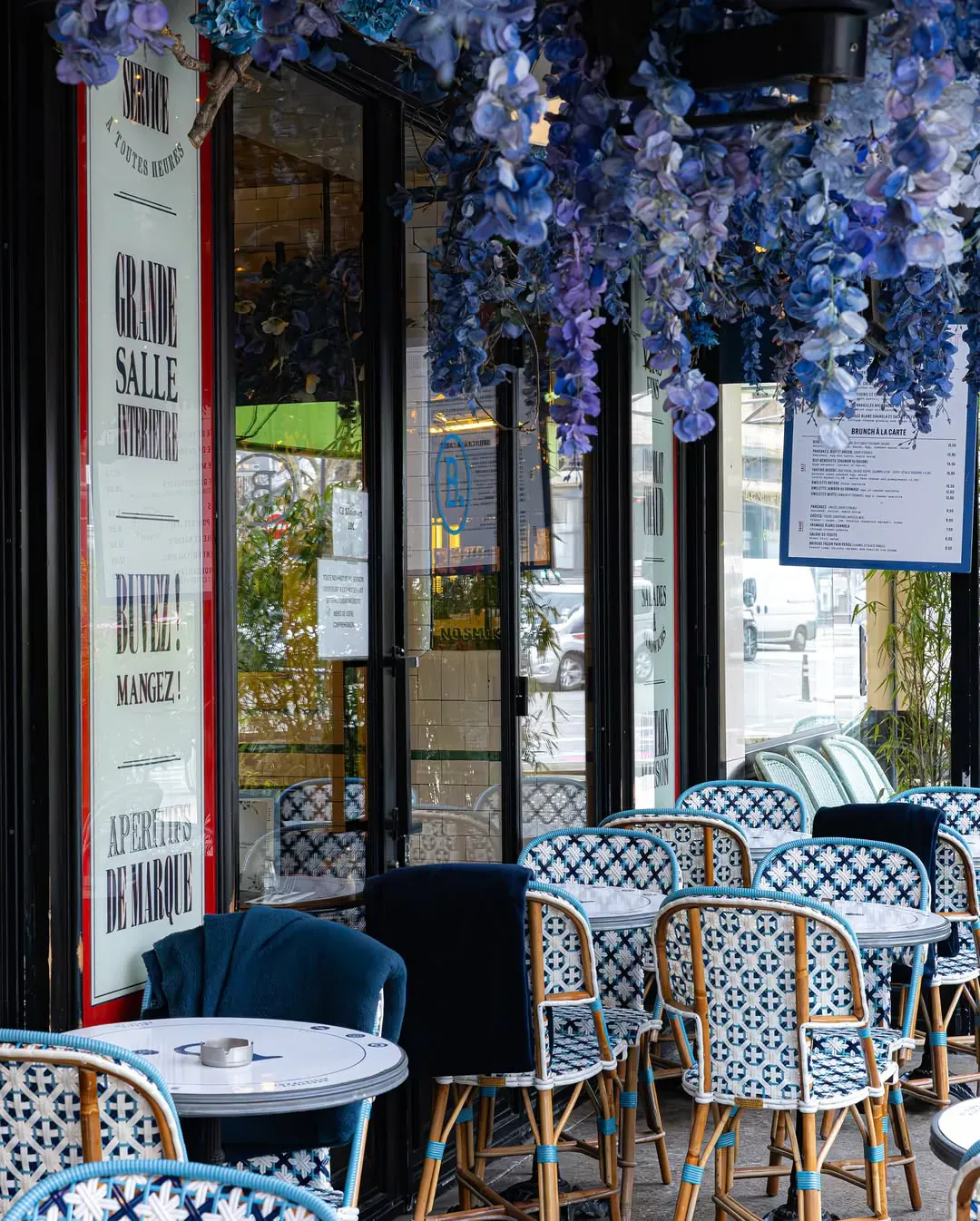
What about the cafe?
The cafe is a place of passage and sociability, built around the counter and terrace, with light food: pastries in the morning, croque, salads and snacks through the day.
Its terrace is its main asset. Many Paris addresses wear several hats: cafe in the morning, bistro at midday, brasserie at dinner.
How to recognise a traditional brasserie
A real brasserie shows reliable signs: home cooking from fresh produce, and a kitchen that never closes between services.
Signature dishes are another clue: seafood, beef tartare, oeuf mayonnaise, fish of the day. Opening 7/7 signals a true service commitment.
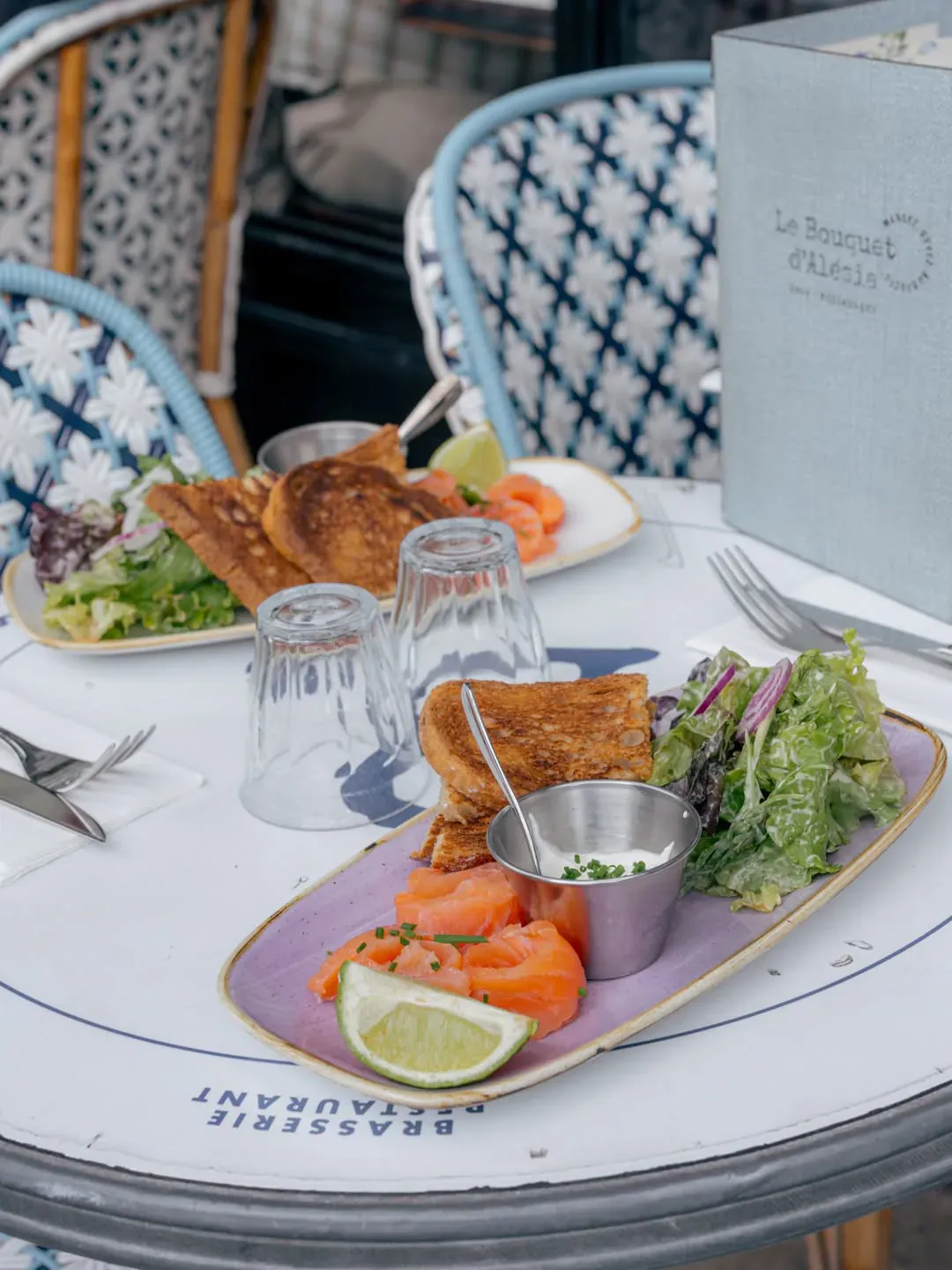
This is exactly the format kept alive by Le Bouquet d'Alesia in the 14th: a traditional Parisian brasserie at 75 avenue du General Leclerc, home cooking and all-day service 7 days a week.
Discover the houseWhich format for the occasion?
Start from the occasion rather than the sign. Four common situations and the format that fits best.
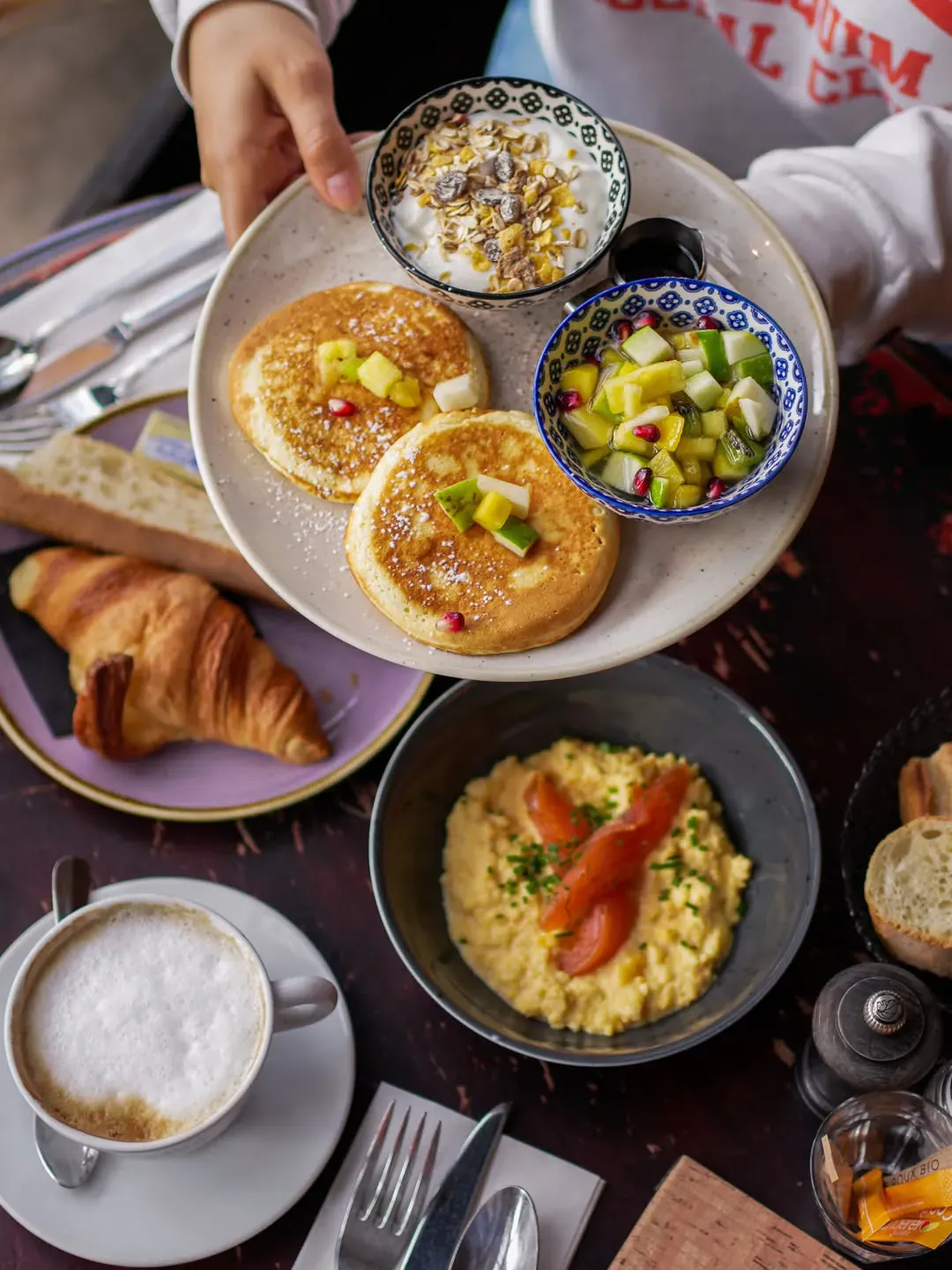
A quick lunch
Short on time: the brasserie serves without waiting for the exact hour; a cafe also works for a salad on the go.
Dinner with friends
The brasserie ticks every box: lively mood, large tables, a menu for everyone. The bistro suits a more intimate dinner.
Sunday brunch
Sunday calls for a relaxed format; many brasseries offer a sweet-and-savoury brunch, taken at your own pace.
A group meal
Birthdays, family gatherings: the brasserie's large rooms absorb big tables. Booking ahead is best.
A Parisian heritage to preserve
Brasserie, bistro and cafe are three ways of welcoming guests, inherited from the city's history. Telling them apart helps you appreciate them.
Next time you hesitate at a storefront, remember: the brasserie welcomes you at any hour, the bistro cooks the day's dish, the cafe offers the pause.
Frequently asked questions
01Is a brasserie more expensive than a bistro?
02Can you eat at any hour in a brasserie?
03What is the difference between a brasserie and a classic restaurant?
04What really defines a brasserie?
05Bistro or brasserie for a group meal?
06Can a cafe also be a brasserie?
Keep reading
To go deeper and discover the spirit of a real 14th-arrondissement table, explore our brasserie paris and our neighbourhood guides.
Read next
Book your table
Call us to book or place your takeaway order.